Rankmako provides roof installation in Pittsburgh for homeowners across the metro area.
PITTSBURGH · LICENSED & INSURED
New Roof Installation Built for Pittsburgh Homes
Rankmako provides roof installation in Pittsburgh for new construction, additions, and homes getting their first roof — asphalt shingle, metal, or slate, engineered for the region’s freeze-thaw winters.
Licensed and insured in Pennsylvania. Free written estimates within one business day of your request.
Roof Installation vs. Roof Replacement — What’s the Difference?
People often use “roof installation” and “roof replacement” to mean the same thing, and most of the time a new roof job involves both. But the two terms point to slightly different jobs.
Roof installation means putting a roof on a structure for the first time. This comes up on new construction, home additions, garages, sunrooms, and other builds that don’t have an existing roof to remove. Installation also describes the physical work of laying down new roofing material — the part of any job where old material is already gone and new shingles, metal panels, or underlayment go on.
Roof replacement means tearing off an existing roof that has reached the end of its life or been damaged, then installing a new one in its place. Every replacement job includes an installation step, but not every installation is a replacement — a brand-new addition being roofed for the first time is an installation with no tear-off involved.
Why It Matters for Pittsburgh Homeowners
Why does this matter for Pittsburgh homeowners? The prep work is different. A first-time install on new framing means starting from bare decking, with full control over ventilation, underlayment, and code compliance from day one. A replacement means working around whatever the previous roof left behind. If you’re not sure which one describes your project, tell us what’s on the roof right now — nothing, or an existing worn roof — and we’ll point you to the right service.
Cost is another place the two jobs diverge. A first-time installation on new framing sometimes runs a bit cheaper per square foot than a replacement, since there’s no tear-off labor or disposal cost for an old roof. But new construction and additions often add their own complexity — matching rooflines, tying new flashing into an existing structure, or working around a build schedule set by other trades — so the savings aren’t automatic. A written estimate that names your actual scope is the only reliable way to know which job costs more for your specific property.
New Roof Installation Options for Pittsburgh Homes
The right material for a new installation depends on the structure, the roof pitch, and how long you plan to own the property. Here’s what we install most often.
Asphalt Shingle Installation
The standard choice for new construction and additions — a wide range of colors, straightforward installation, and a lower upfront cost than metal or slate. Works well on most pitches common in Pittsburgh neighborhoods.
Metal Roof Installation
Standing seam or exposed fastener panels installed on new builds that want a long-lifespan roof from day one. Sheds snow cleanly, which matters on steep new-construction rooflines.
Slate Roof Installation
Less common on new construction because of weight and cost, but the right choice when a new addition needs to visually match an existing slate roof on a century home.
New Construction & Additions
Garages, sunrooms, and home additions need a roof installed from bare decking — a different scope than a tear-off, with its own permit and inspection steps.
Pittsburgh Building Codes & Permits for New Roof Installation
Allegheny County and most of its municipalities require a building permit for new roof installation, whether it’s a full new-construction roof or a first-time install on an addition. The permit process typically involves submitting plans showing the roofing material and structural details, and confirming the work meets the Pennsylvania Uniform Construction Code, which most municipalities in the county have adopted.
Pennsylvania homeowners are also protected under the state’s Home Improvement Consumer Protection Act, which requires a written contract for any home improvement job over $500.
Permit requirements vary by municipality — the City of Pittsburgh, Allegheny County’s suburban municipalities, and townships each run their own permit office, so the exact paperwork and inspection schedule depends on where the property sits. A contractor familiar with the local permit office can usually tell you what’s needed before work starts, and can pull the permit as part of the job.
Skipping a required permit can cause problems later — at resale, with insurance claims, or if a municipal inspector notices unpermitted work. It’s worth confirming permit requirements before installation day, not after.
Installing for Pittsburgh’s Climate
Pittsburgh winters bring repeated freeze-thaw cycles, and a new roof installed here needs details that a warmer-climate install wouldn’t. Ice-and-water shield along eaves and valleys is standard on new installations in this region — it stops ice dams from working water back up under the shingles during a thaw.
Proper attic and roof ventilation matters even more on a first-time install, since this is the one chance to get the intake-and-exhaust balance right before the decking is covered. On additions built onto century-old Pittsburgh homes, this often means designing new ventilation that also works with the original structure’s existing attic space, not just the addition’s own roofline.
Roof pitch matters too. Many Pittsburgh neighborhoods have steep-pitched rooflines on older housing stock, and additions built to match need an installation crew comfortable working that pitch safely — not every crew is.
Snow load is worth planning for too. Pittsburgh doesn’t see the heaviest snow totals in Pennsylvania, but a new roof still needs decking and framing rated for the region’s typical accumulation, plus a roofing material that sheds rather than holds snow on a steep pitch. This is easiest to get right on a first-time installation, since the structural details are being set for the first time rather than inherited from an older build.
How a New Roof Installation Runs
Here’s what happens from the first site visit to the final walkthrough. For a broader look at what to expect at each stage of any Pittsburgh roofing project, see our step-by-step roofing process guide.
Site Visit & Permit Check
We look at the structure, take measurements, and confirm what permit the municipality will require before any material is ordered.
Material Selection
Choose asphalt, metal, or slate based on the structure, budget, and whether it needs to match an existing roof nearby.
Installation Day
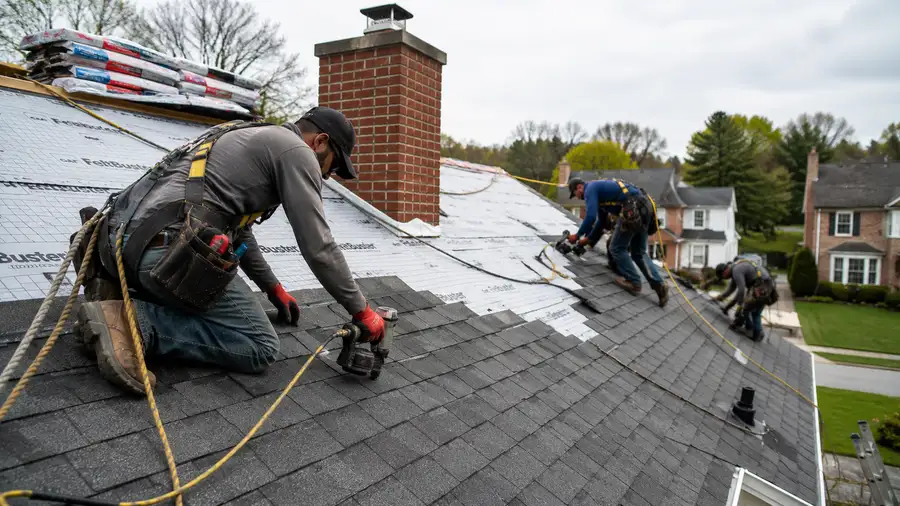
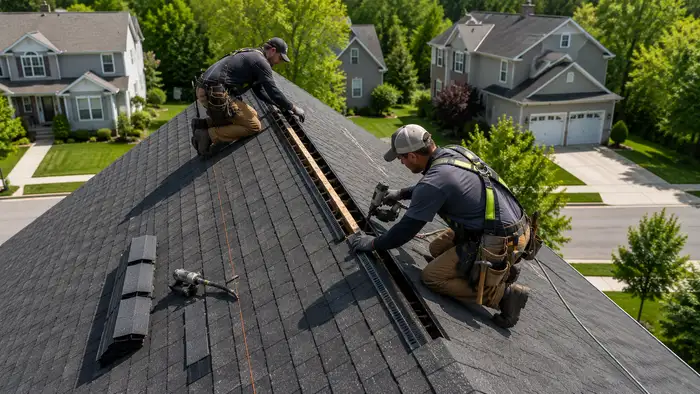
Underlayment, ice-and-water shield, and the chosen roofing material go on in sequence, with flashing and ventilation detailed as the crew works.
Final Walkthrough & Permit Close-Out
A final inspection confirms the work meets code, and the permit is closed out with the municipality before the job is considered done.
Installation Service Options
Asphalt Shingle Installation
New construction, additions, first-time installs
Standard choice for most new roofs in the Pittsburgh area.
Metal Roof Installation
Standing seam or exposed fastener panels
For new builds wanting a long-lifespan roof from the start.
Slate Roof Installation
Natural slate, matched to existing roofs
For additions on century homes needing a slate match.
Frequently Asked Questions
Cost, Timeline & Permits
How much does a new roof installation cost in Pittsburgh?
How long does a new roof installation take?
Do I need a permit to install a new roof in Allegheny County?
Season, Warranty & Installation vs. Replacement
What’s the best season to install a new roof in Pittsburgh?
What warranty comes with a new roof installation?
What’s the difference between roof installation and roof replacement?
Book Your Roof Installation Estimate This Week.
Free written quote, on-site measurement, no obligation. Licensed and insured across Pittsburgh and Allegheny County.
More Pittsburgh Services & Areas
- Roof ReplacementAlready have a roof that needs to come off? See our full tear-off and replacement process.
- Metal RoofingStanding-seam and metal shingle systems for steep-pitch Pittsburgh roofs.
- Cedar Shake RoofingHand-split and taper-sawn cedar shake, installed and matched to historic homes.
- Roof InspectionNot sure what your roof needs? Start with a full inspection.
- All Roofing ServicesFull service list — asphalt, metal, flat roofs, gutters, and inspections across Pittsburgh.
- Contact UsQuestions about your installation? Get in touch.